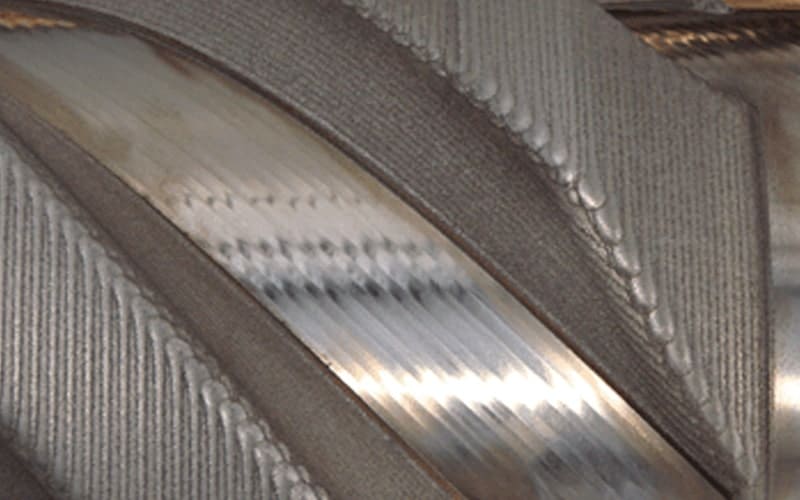
Precision Repair of Turbine Blades by Using Laser Cladding
I. What is Laser Cladding?
Laser cladding is a cutting-edge surface modification process that uses a high-powered laser beam to melt coating materials (typically metal powder or wire) onto the substrate. As the laser beam moves across the blade’s surface, the added material forms a metallurgically bonded layer. This allows for highly precise and localized repair, making it ideal for turbine blades because they are complex in shape and made of high-performance alloys.
II. Why Turbine Blades Need Laser Cladding Repair
Turbine blades work under extreme mechanical and thermal loads. Over time, they are affected by thermal fatigue, oxidation and corrosion, foreign object damage (FOD), erosion from particulates, or creep and cracking.
Instead of full replacement, laser cladding offers a well-targeted solution that can restore the damaged surfaces while preserving the blade’s structural integrity and base materials.
III. The Laser Cladding Process for Turbine Blade Repair
- Evaluate the Damage Area
Please give priority to the non-destructive testing methods such as ultrasonic inspection or X-ray imaging when detecting cracks, erosion or dimensional wear.
- Make Surface Preparation
The blade surface must be carefully cleaned, often with grit blasting, to remove oxidation and pollution, in order to ensure optimal bonding effects.
Choose the appropriate alloy powder based on the original blade material and desired properties (e.g., hardness, corrosion resistance).
- Start Laser Cladding
A high-power fiber laser beam melts the powder onto the target area in a controlled manner. The specific parameters (laser power, feeding rate, powder flow) shall be finely tuned for consistent deposition.
- Carry out Post-Cladding Machining
Once cooled, the cladding blade will undergo CNC machining or grinding to restore its original shape and aerodynamic profile.
- Proceed with Heat Treatment and Testing
The blade may be heat-treated to relieve residual stress, followed by dimensional and hardness testing to ensure its high laser cladding quality.

IV. Commonly-used Cladding Materials
√ Inconel 625/718: Contribute to excellent corrosion and heat resistance.
√ Stellite 6: Take on outstanding wear resistance as cobalt-based alloy.
√ Hastelloy C-276: Ideal for chemical environment.
√ NiCrAlY coatings: Common in high-temperature turbine environment.
√ WC-Co (Tungsten Carbide-Cobalt): Used for extreme wear resistance.
V. Challenges and Considerations
While laser cladding offers numerous advantages, several challenges must be taken into account:
√ Take Precise Control of Parameters: Improper settings may result in poor bonding or defects.
√ Machine Costs: High-end laser cladding systems require significant capital investment.
√ Skilled Operators: Skilled technicians are essential for optimizing operating parameters and ensuring high-quality repairs.
VI. Advantages of Laser Cladding for Turbine Blades
1. Extended Lifespan
By reinforcing worn areas with durable coatings, laser cladding is mainly intended to extend the service life of turbine blades, improving their performance and reducing downtime.
2. High Precision and Accuracy
Laser cladding is highly controlled and focused, ensuring minimal heat-affected zone (HAZ) and reducing the risk of microstructural distortion or damage to surrounding areas.
2. Material Compatibility
The process is compatible with a wide range of superalloys like Inconel, Hastelloy, and cobalt-based alloys, commonly used in turbine blade production. The tailored powders can be selected to match or exceed the original performance of materials.
3. Cost Efficiency
Repairing turbine blades with laser cladding is significantly cheaper than replacing them. Industries usually prefer to restore high-value components instead of discarding them, because such behavior will save both money and raw materials.
5. Eco-Friendly Effects
Laser cladding also reduces waste and supports sustainable production by reusing existing components rather than scrapping them.

VII. Applications in Aerospace and Energy Sectors
√ Aerospace
Aircraft turbine blades are often made from expensive nickel-based superalloys and exposed to harsh environment. Laser cladding restores the eroded zones and tip damage, which will maintain engine performance and keep safe without expensive replacement.
√ Power Generation
Steam and gas turbines used in power plants also benefit from laser cladding. This craft is widely applied to repairing first-stage blades, which suffer the most abrasion arising from fast rotation and high temperature.
√ Oil & Gas Industry
Laser cladding repairs compressor blades and turbine nozzles, allowing relevant plants to operate quickly and safely over longer periods.
VIII. Future Outlook: Integration with Industry 4.0
With the adoption of Industry 4.0, laser cladding machines are becoming smarter and more efficient, with features such as:
√ Real-time monitoring
√ AI-based defect detection
√ Automated robotic arms
√ Digital twin simulation
…are driving towards high automation, quality control and repair efficiency in while maintaining the turbine blades.
IX. Case Study: Repair of Jet Engine Turbine Blades
A global aerospace MRO (Maintenance, Repair, and Overhaul) center integrated a laser cladding machine to restore its nickel-alloy blades with tip wear and edge cracks. Using a fiber laser and Inconel 718 powder, they achieved:
√ 98% material recovery
√ Zero rejection due to cladding defects
√ Blade lifespan prolonged by 2,000 flight hours
√ Cost savings of over 70% compared with purchasing of new blades
X. Final Conclusion
Laser cladding is totally changing the repair landscape of turbine blades by offering highly precise, durable and cost-effective restoration. As industries seek more sustainable and fast maintenance solutions, this advanced technology continues to gain momentum across aerospace, energy and heavy industry sectors.
By applying laser cladding to turbine blade repair, businesses not only extend the life of critical components but also improve operational uptime, reduce maintenance costs, and contribute to a greener manufacturing future.
Whether you’re an aerospace engineer, plant manager, or MRO specialist, laser cladding should be on your radar as a useful tool for repairing turbine blade repair at high precision.